Until the Middle Ages, the Île de Ré consisted of several islets: Ré, the largest, which corresponds to the southern part of the present-day island, and the islets of Ars and Loix (the Îlot des Portes having become part of Ars as early as the first millennium). Gradually, the channels between these various islets were filled in by the natural deposition of clayey alluvium:
the brief.
Thus, thanks to these impermeable sediments and favorable climatic conditions, the conditions necessary for the formation of the Ré salt marshes were established. To this end, this land was reclaimed from the sea through the construction of dikes that preserved
these photos of rising water levels during spring tides.
Although the first salt marshes on the Île de Ré were likely built as early as the 12th century by the monks of the Abbey of Saint-Michel-en-l’Herm, who were the lords of the islets of Ars and Loix, salt production did not truly take off until the 15th century. By the 19th century, there were 1,550 hectares of active salt marshes (representing 18% of the Île de Ré’s surface area). This marked the peak of salt production, which reached over 30,000 tons per year and accounted for a significant portion of the island’s wealth. Starting in the 1850s, a long period of decline and abandonment began for a large portion of the Île de Ré salt marshes. The lack of maintenance of the levees protecting the salt pans led to the loss of certain marshes, which were once again flooded by the sea. By the early 1990s, the salt workers of Ré seemed destined to disappear. Fortunately, starting in the mid-1990s, an active policy to revive salt production allowed young producers to settle in and restore abandoned salt marshes, thereby preserving these centuries-old traditions.
The Salt Roads
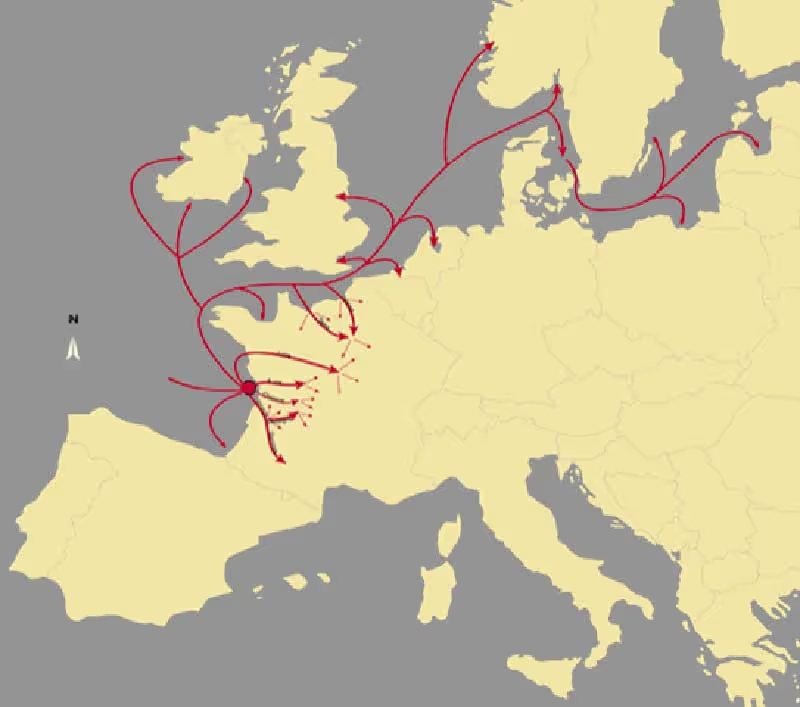
Salt has historically been one of the Île de Ré’s greatest assets; its role in preserving food made it indispensable to the island’s economy. As a result, a thriving trade in salt developed from the Île de Ré, primarily to Northern Europe (Germany, the Netherlands, Denmark, Norway, etc.), where fishing fleets consumed large quantities of it. Salt from Île de Ré also supplied the French mainland. These trade routes were relatively complex due to the particularly heavy taxation imposed on salt, the famous gabelle system. Île de Ré shipped its salt mainly to the so-called “redimées” provinces of the southwest, which had purchased the tax monopoly from the crown and where the price of salt was less prohibitive. This true “white gold” from Ré also supplied the general salt tax farms via the Loire and Orléans, but especially through the ports of northern France such as Dieppe, Honfleur, and Rouen, which served Paris in particular...
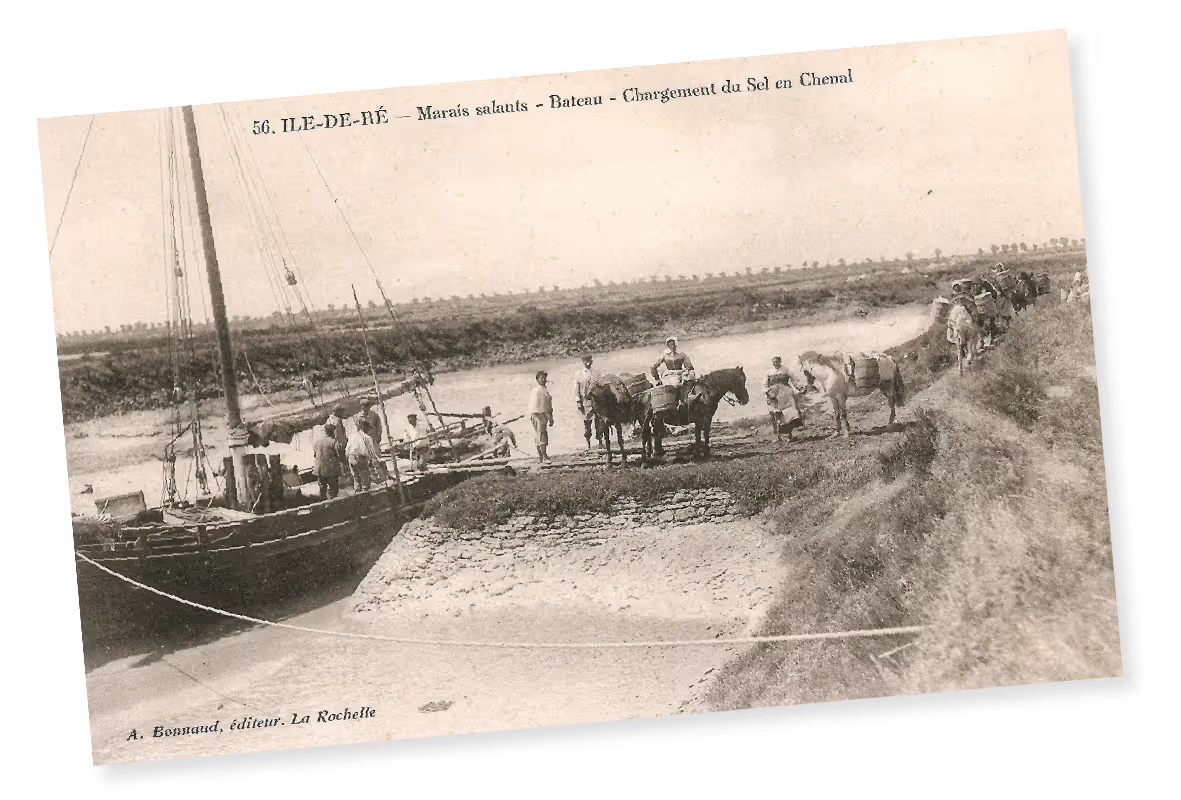
The salt trade was conducted primarily by sea. It was loaded onto relatively small vessels, known as allèges, which traveled up the marsh channels to the loading docks—rudimentary wharves where the transshipment took place. Transporting the salt from the tasselier (the salt storage site in the marsh) to the ship was a time of intense activity to ensure the cargo was loaded in time for the tide. The allège would then set off to transfer its cargo to larger vessels anchored in the roadstead of Saint Martin or in the Loix basin. When the salt was destined for the provinces exempt from the salt tax, the barges went directly to the river ports: Marans, Tonnay-Charente, Libourne, or Bordeaux. The cargoes were then transported upriver on flatboats to be distributed by land to the places of consumption. Salt from Ré thus supplied markets as far away as Bayonne and Clermont-Ferrand. Starting in 1898, a railway on the Île de Ré supplemented maritime transport. Transported to La Rochelle, the salt was then shipped by train to the rest of the country. The Ré “salt tramway” ceased operations in 1935. Its demise was hastened by the decline of the Ré salt trade in favor of salts from the East and the South, which were produced on a large scale and at lower cost.