HISTORY
The Origins of the Marshes on Île de Ré
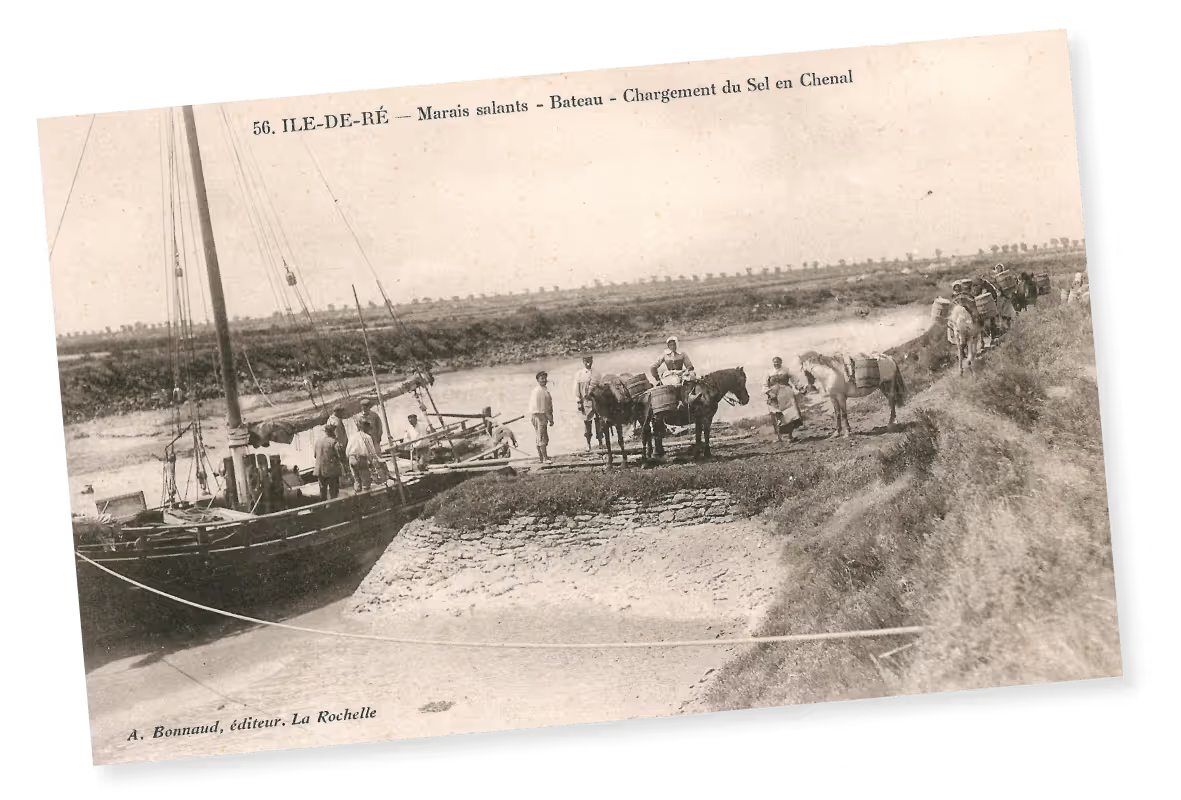
Until the Middle Ages, the Île de Ré consisted of several small islands: Ré, the largest, which corresponds to the southern part of the present-day island, and the islets of Ars and Loix (the islet of Les Portes having joined that of Ars as early as the first millennium). Gradually, the channels between these various islets were filled in by the natural deposition of clayey alluvium: bri. Thus, thanks to these impermeable sediments and favorable climatic conditions, the elements conducive to the creation of the Île de Ré salt marshes came into being. To achieve this, land was reclaimed from the sea through the construction of levees that protected these salt pans from rising water levels during spring tides (see map opposite).
TOOLS
Salt Harvesting
Coarse salt and fleur de sel are entirely natural products; they undergo no processing between harvest and sale.
Harvested from the bottom of the final basin—the evaporation basin—coarse salt has a gray color due to the clay particles it contains. Typically harvested every other day, this salt accounts for the majority of the salt marsh’s production. On certain days, when evaporation is particularly intense, a thin film forms on the surface of the evaporation basin; this is fleur de sel. Since it does not come into contact with the clay bottom of the basin, this salt is naturally white but also finer than coarse salt. With a subtle flavor, fleur de sel is used as table salt.
HOW IT WORKS
The Principles of Salt Pans
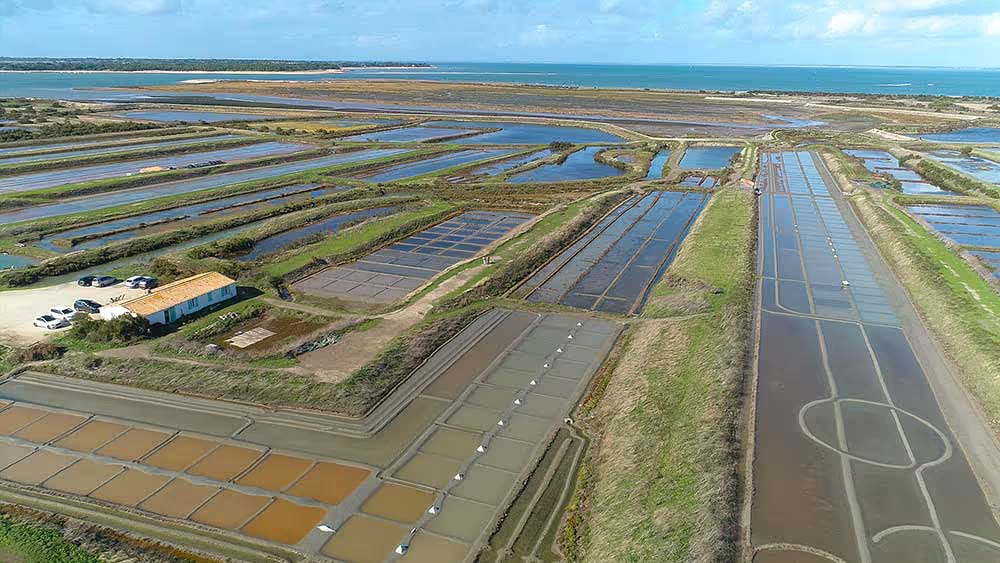
An essential part of the Île de Ré’s heritage, the salt marshes have shaped the landscape and form a particularly rich natural environment that is home to a wide variety of birds and unique plant species. Maintaining and promoting salt production ensures the preservation of this balance between humans and their environment.
THE NATURAL ENVIRONMENT OF THE MARSH
Flora and fauna
Salt marshes are a unique natural environment where land meets sea, home to a fertile yet fragile ecosystem. By maintaining the water circulation system, ensuring the renewal of water in the basins, and keeping water levels steady in the marsh, the salt worker helps preserve this natural environment.
