Utensils & Tools
Salt Harvesting
Coarse salt and fleur de sel are entirely natural products; they undergo no processing between harvest and sale.
Harvested from the bottom of the final basin—the evaporation basin—coarse salt has a gray color due to the clay particles it contains. Typically harvested every other day, this salt accounts for the majority of the salt marsh’s production. On certain days, when evaporation is particularly intense, a thin film forms on the surface of the evaporation basin; this is fleur de sel. Since it does not come into contact with the clay bottom of the basin, this salt is naturally white but also finer than coarse salt. With a subtle flavor, fleur de sel is used as table salt.
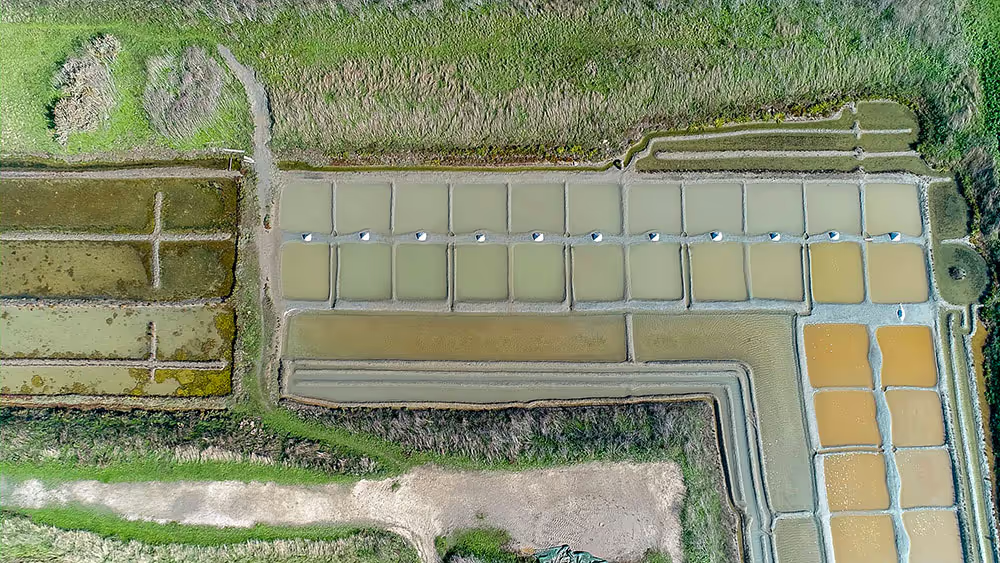
Tools used in the salt marsh
__ during HARVEST
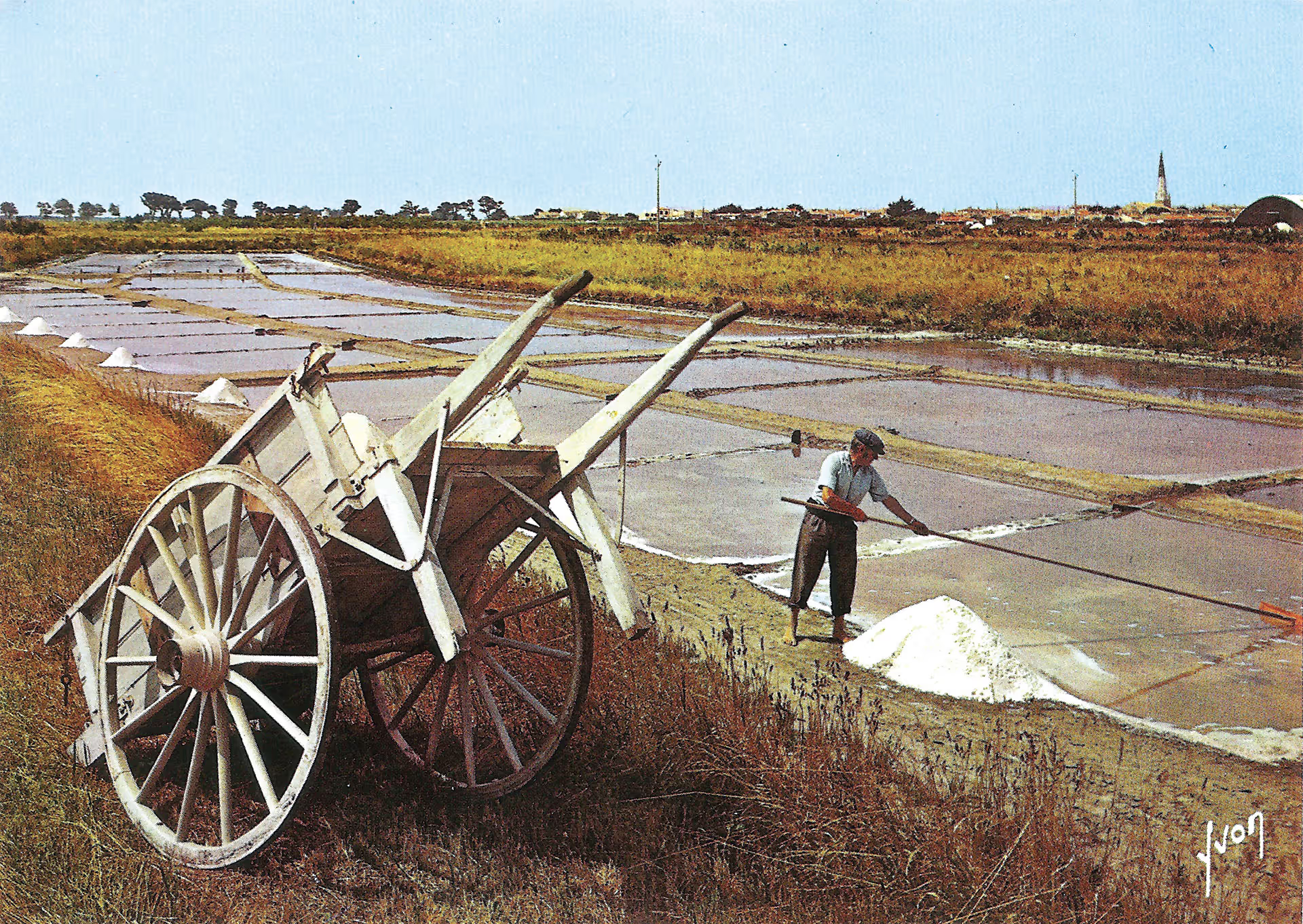
LE SIMOUSSI
Consisting of a small board or slat measuring 80 cm long by 10 to 12 cm wide, attached to the end of a long handle (the pole) approximately 4.5 meters in length, this tool is used to harvest the coarse salt that has settled at the bottom of the salt pan.
LE SOUVRON
This tool, which has a shorter handle than the simoussi (about
2 m), is used to haul salt up the path. To allow water to drain during this process, the trapezoidal board at the end of the handle is perforated with holes. Once the salt has been hauled up onto the path, the salt worker uses the back of the souvron to shape the pile into a small pyramid, a shape that facilitates water drainage.
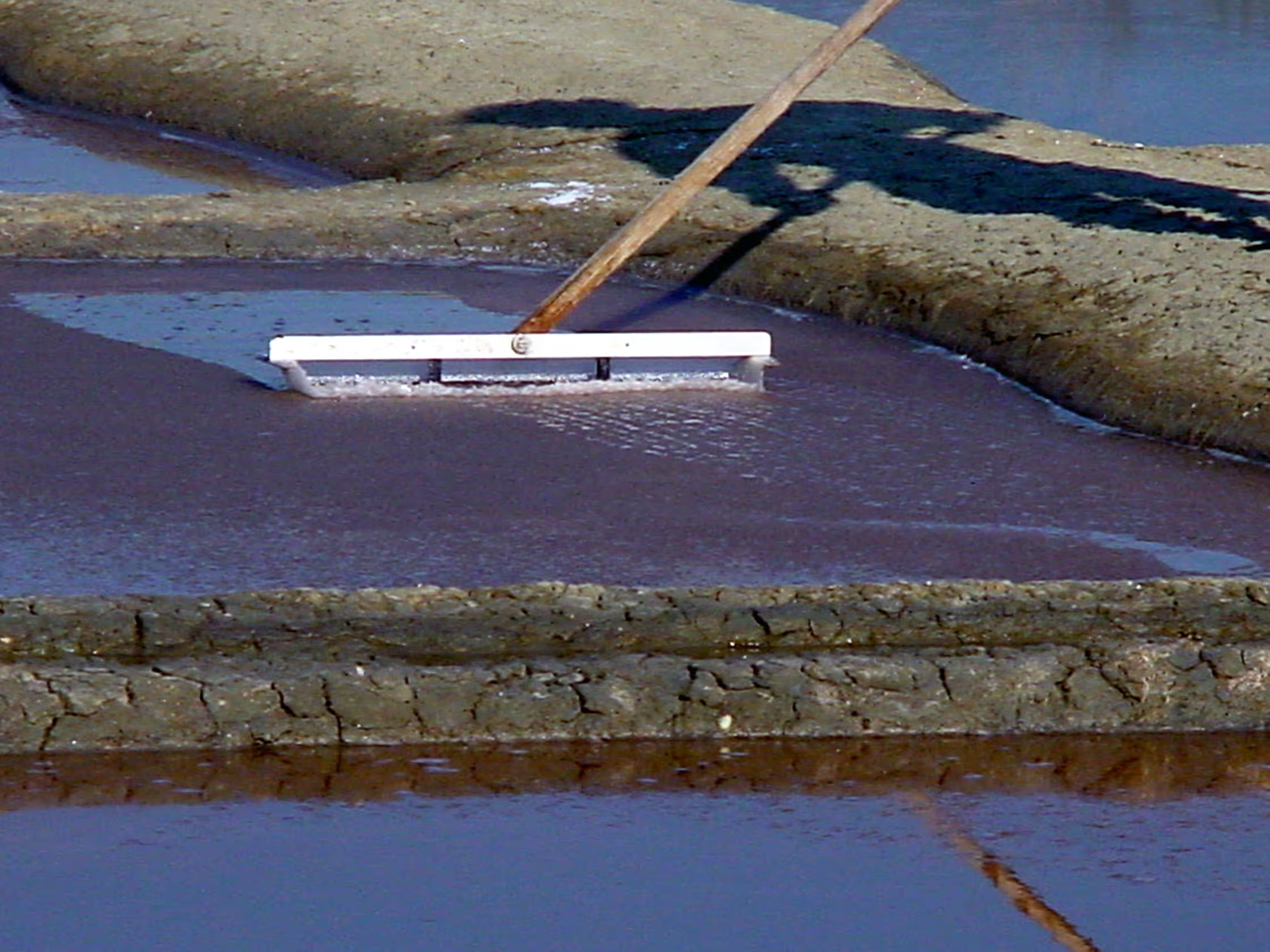
THE MISFORTUNE
On the Île de Ré, fleur de sel was traditionally harvested using a souvron, a tool that has now been replaced for this task by a specialized implement: the lousse. Consisting of a handle measuring 2.5 to 3 meters and a small board measuring 50 cm by 25 cm, the lousse is used to collect the fleur de sel, which forms a thin layer on the surface of the salt pan.
__ for the INTERVIEW
THE ROAD
Similar in shape and size to the simoussi, the rouable features sturdier joints and a thicker scraper (small board). Using this tool, the salt worker removes the soft mud and algae that have accumulated on the bottom of the basins over the winter, leaving a smooth, clean clay surface that allows for proper water flow and salt deposition.
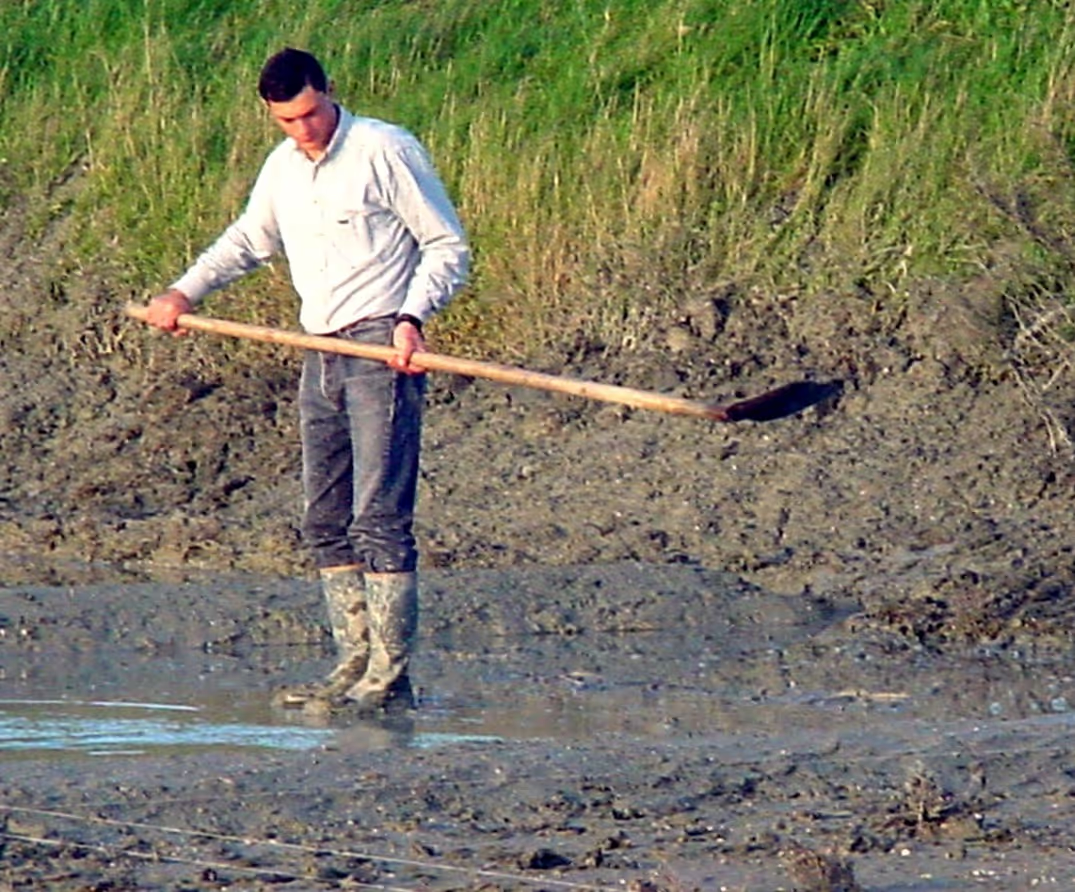
LA BOGUETTE
This wooden shovel with a curved blade is used to remove mud from the edge of the ponds using a wheelbarrow. The shovel is then used to rebuild the small clay embankments and other paths in the marsh.
