Quite a story
The Beginnings of the Marais Salant Ecomuseum
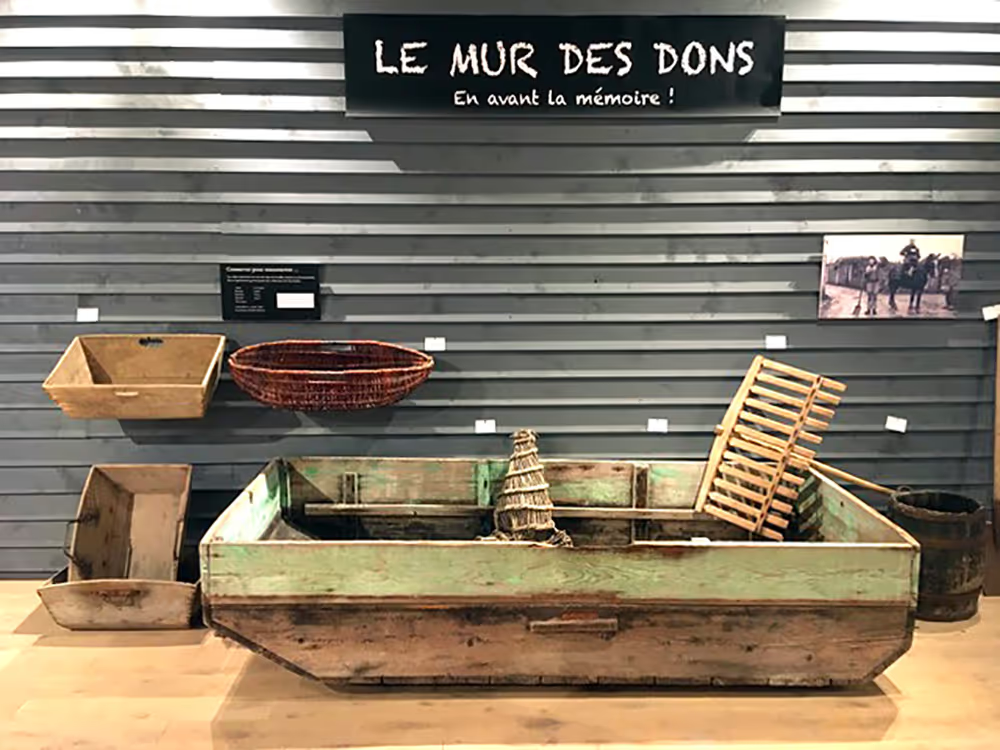
The Écomusée du Marais Salant was founded in 1997 to continue the conservation and promotion efforts initiated by the Groupement d’Etudes Rétaises in 1982 with the creation of the Maison du Marais Salant.
The Écomusée du Marais Salant aims to conserve, promote, foster, and support—through all available means, including research, studies, exhibitions, events, and publications—the salt marshes of Île de Ré, particularly through the associated traditional skills, the products derived from these marshes (both existing and future), the protection of the sites, and more generally all activities or objects related to the rural heritage of Île de Ré.
To achieve these objectives, the Ecomuseum team maintains ongoing dialogue with the salt workers (salt producers of the Île de Ré) and all stakeholders in the island’s heritage and economy.
Exhibitions, workshops, and guided tours help promote the Île de Ré salt industry; research, exchanges, and data collection are organized at both the local and European levels.
Strong values
A policy is in place to collect objects, documents, and oral histories.
Tours and Activities
Discover the salt marshes of Île de Ré: the guided tour begins with a model that explains how the salt marshes work, then continues to the active salt marshes.
During the tour, depending on the season, visitors learn about the salt worker’s tasks, the unique flora of the marshes—including glasswort, sea lavender, and sea mustard—and the migratory birds, such as geese, shelducks, and egrets...
An Afternoon in the Marshes
• Educational workshops for children,
• Meet the salt maker (for adults)
outdoor activities
• exhibitions,
• presentations,
At the Salt Marsh Ecomuseum, trials are being conducted to test new techniques and/or tools. These experiments are carried out in collaboration with professionals on the salt marsh operated by the ecomuseum.
The ecomuseum also allows university research labs to conduct studies (such as
the PAMPAS program with the University of La Rochelle).
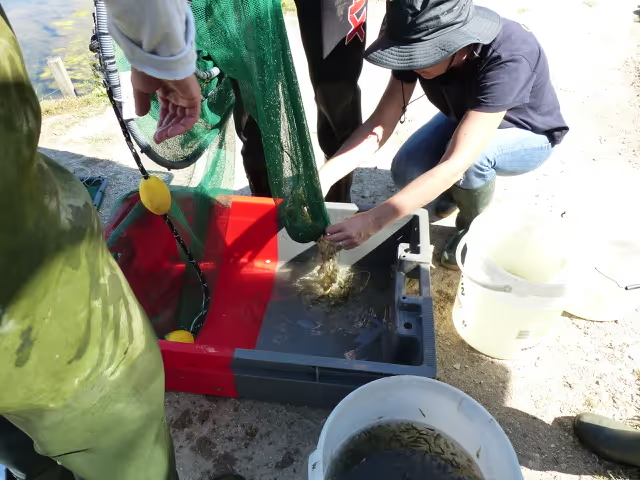
Samples collected for analysis in the Vasais ©armelle.combaub
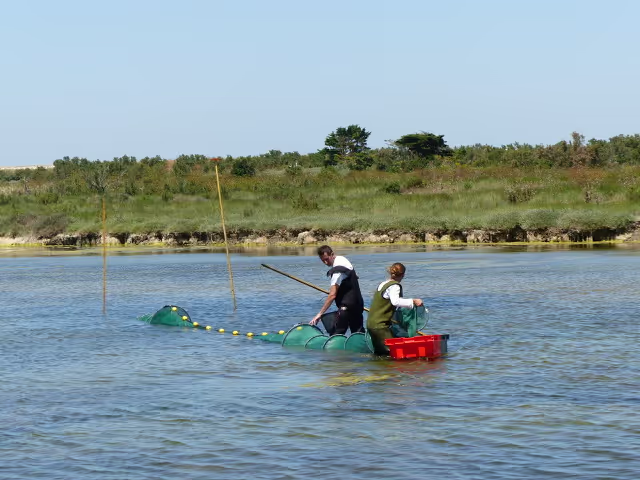
Samples collected for analysis in the Vasais ©armelle.combaub
Participation in the local professional community through membership in the Île de Ré Salt Workers’ Cooperative and the Association of Salt Producers of the Île de Ré. Collaboration with various regional and national organizations. Hosting young people in training, interns, and students, and organizing meetings among professionals.
The Ecomuseum also manages a sensitive natural area, a 22-hectare coastal wetland consisting mainly of salt marshes. This site belongs to the Conservatoire de l’Espace Littoral, a public administrative institution whose mission is to implement a land policy aimed at preserving threatened natural sites along the coast and on the shores of France’s major lakes.
Institution
Management of the Ecomuseum
The Salt Marsh Ecomuseum is a non-profit cultural association governed by the French law of 1901.
The Board of Directors is composed of one legal entity—the Groupement d’Études Rétaises association—and individual members. The Conservatoire de l’Espace Littoral, the Coopérative des sauniers de l’Ile de Ré, and the Groupement des Sauniers de Charente Maritime each hold a seat on the Board of Directors without voting rights. The Ecomuseum’s staff—four employees representing 2.6 full-time equivalents—ensures the organization’s operations in accordance with the guidelines set by the Board of Directors.
The Ecomusée du Marais Salant receives no public financial assistance for its operations; revenue from admissions and the gift shop covers salaries and operating expenses.
For major investments—such as building renovations, site improvements, or large-scale equipment—the museum relies on public or private funds, notably from the Charente-Maritime Departmental Council, with which a Performance Agreement was signed as part of the Echappées Nature network.
Location
A unique situation
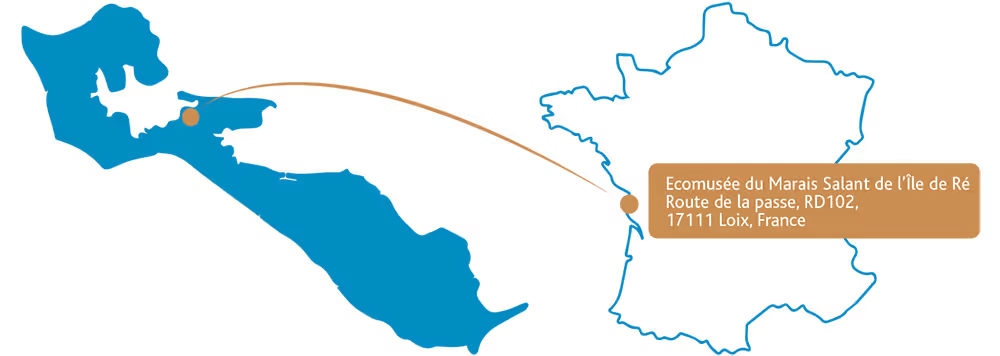 What is an ecomuseum? >