's Salt Marsh Ecomuseum

WHAT IS AN ECO-MUSEUM?

A nature-inspired concept

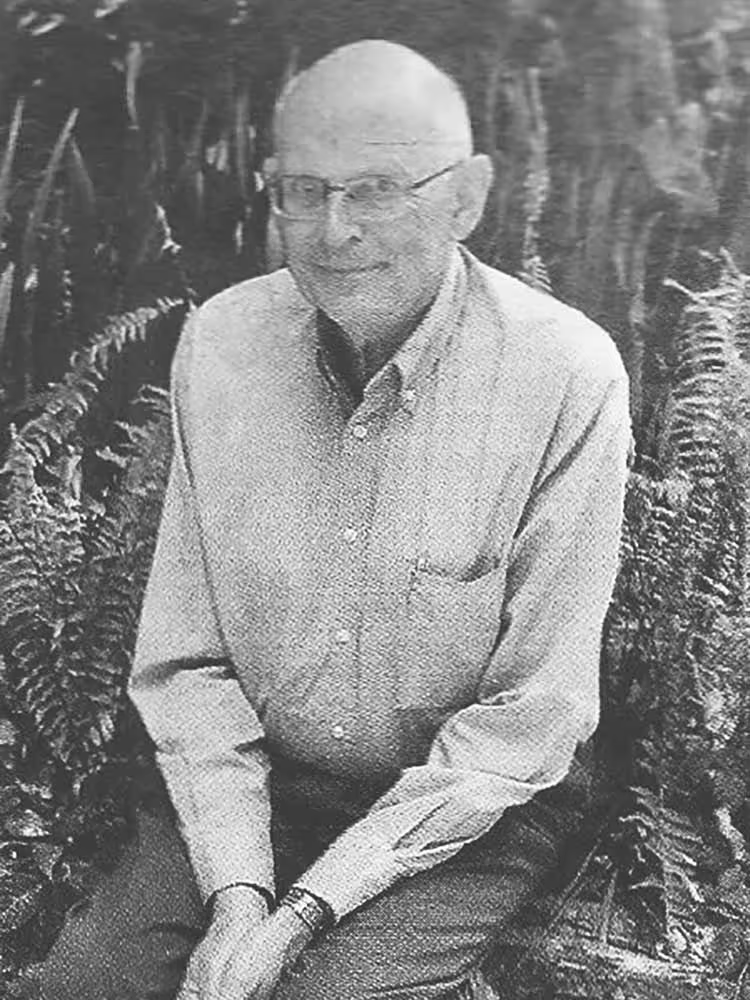
founder of the ecomuseum
Hugues de Varine
A concept co-developed by Georges Henri Rivière and Hugues de Varine, first tested in 1968 in regional nature parks— such as the La Grande Lande Ecomuseum (Marquèze)—and in 1971 in Le Creusot, the ecomuseum has since evolved.

Like other new forms of heritage promotion such as third places, the ecomuseum interacts with everyone and everything, within and based on the territory or cultural identity it has set as its boundaries, concerned equally with the present, the future, and the past.  Without social or aesthetic hierarchy. All of this challenges established ways of thinking and traditional categories. There is no single model; there are only examples: the Bintinais Ecomuseum, the Daviaud Ecomuseum, the Alsace Ecomuseum, the La Roudoule Ecomuseum, Paysalp…
The ecomuseum is a space for debate; it brings men and women together around shared projects for the region and its residents.

This open, permanent space fosters discussion on issues related to societal change and is engaged with by various audiences: volunteers, staff members, visitors, and members of local or professional communities.
Joint projects are developed and implemented by officials and stakeholders with the active support of elected officials. These projects draw on natural, cultural, tangible, and intangible heritage to develop the region and its activities. This heritage flourishes through research and outreach activities. These projects help maintain and foster connections among communities, as well as collect, preserve, and share heritage.

An ecomuseum is a process; people and projects may change in response to the region’s evolution. The concept of the ecomuseum was formalized in 1971 by theInternational Council of Museums, and in France, a charter has defined its objectives and specific characteristics since March 4, 1981.

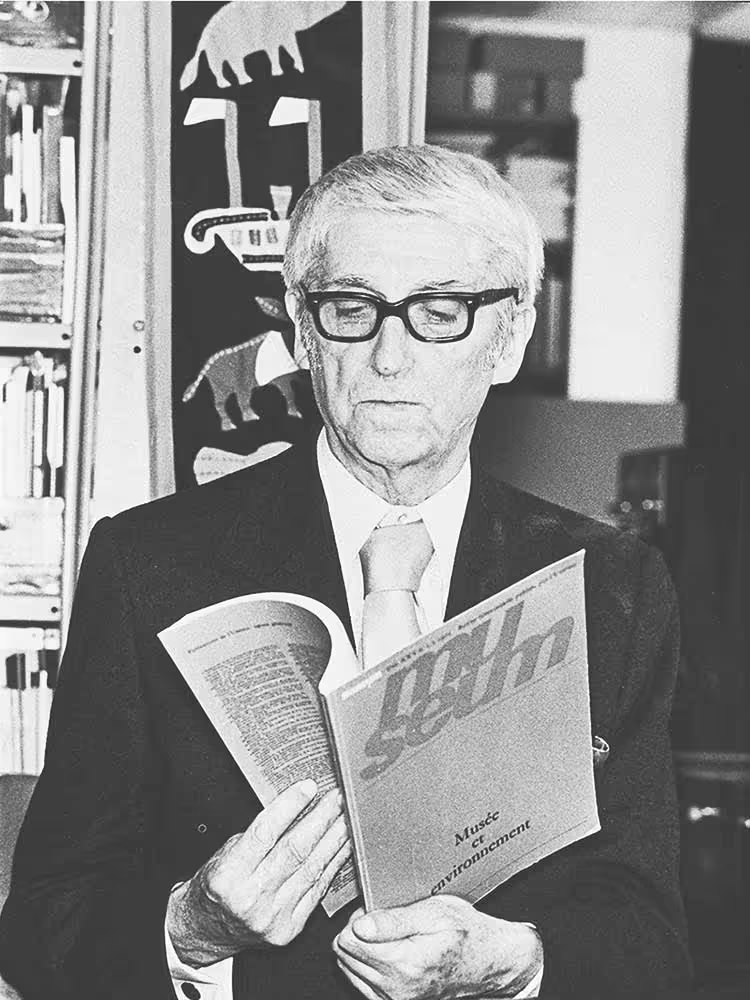
founder of the ecomuseum
Georges Henri Rivière

Ecomuseum Charter

It undoubtedly responds to the French people’s growing desire to fully embrace their ethnographic heritage and, in doing so, to explore the deeper meaning of the land they inhabit, in all its spatial and temporal dimensions.
Laboratory, school, conservatory—the ecomuseum encompasses and goes beyond the traditional concept of a museum: the diversity of its missions gives this institution a multidisciplinary purpose and requires a specific internal organization to ensure the participation of all stakeholders, including scientists, managers, and local communities.
This distinctiveness can only be sustained over the long term if, at the same time, solid legal and scientific safeguards are in place regarding the status and conservation of the collections, as well as the implementation of research, inventory, and educational programs.

Faced with an increasing number of organizations with very diverse interests, and with repeated requests for funding, the Ministry of Culture was therefore obliged to clarify the framework for its intervention.

The purpose of this text is not to freeze or appropriate this institution, but to identify the fundamental principles of its organization and operation, and to clarify the conditions under which the Ministry of Culture could provide support for these initiatives.
View the Ecomuseum Charter by Jean-Philippe LECAT
Grande Lande Ecomuseum (Marquèze)
Alsace Ecomuseum

Definition of an ecomuseum

A multifaceted, interdisciplinary museum that explores humanity across time and space, within its natural and cultural environments, inviting the entire community to participate in its own development through various forms of expression rooted primarily in the reality of sites, buildings, and objects—real things that speak more eloquently than the words or images that flood our lives.
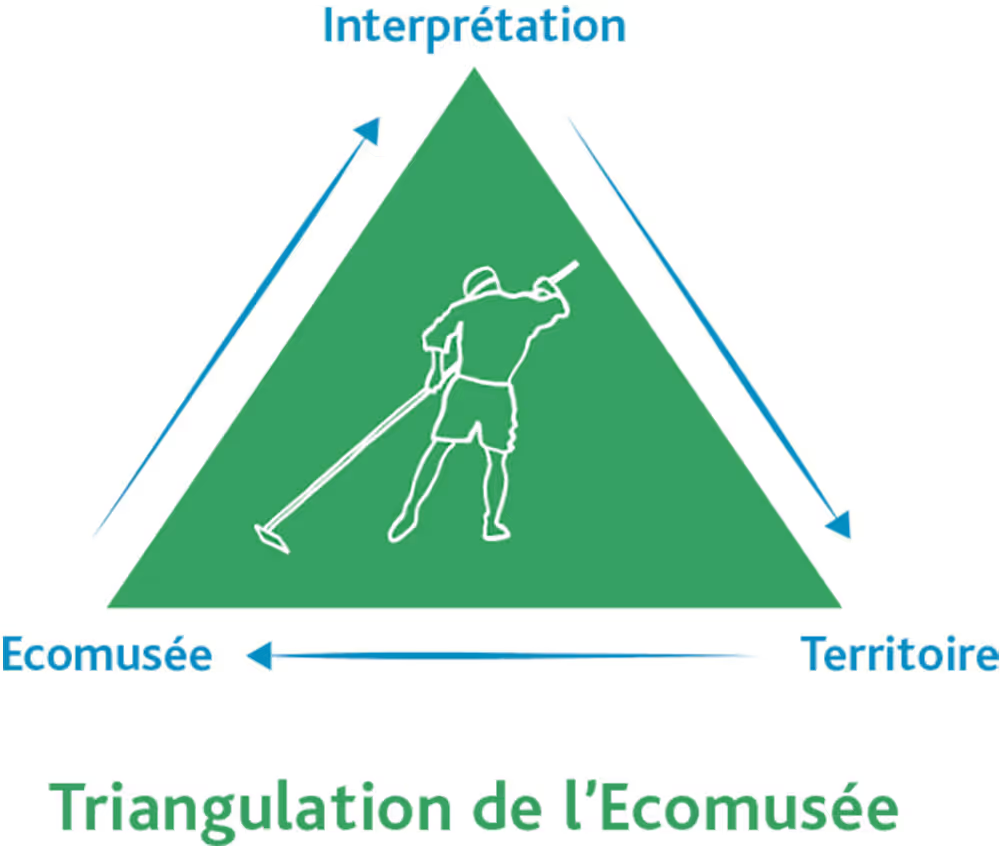
How the Ecomuseum Works